The Kneeboard: A Love Letter to Analog
I love kneeboards. Not in the way people collect gadgets—I own exactly one. But that’s precisely the point. They never fail. They’re always there when you need them. And the return on investment is just insane.
There are many options out there and today I will focus on the one I use : the KB-1-A from ASA. ASA has no fewer than six kneeboard models to choose from, but they essentially boil down to three products:
-
Two flavors of their aluminum kneeboard (VFR and IFR versions)
-
A tri-fold kneeboard that embeds the aluminum product with two pouches for an E6B and sectional
-
An iPad mini clip with strap that looks like black leather
Five Years With the VFR Aluminum
Personally, I’ve been using the VFR aluminum model for the past five years, and it’s been a workhorse.
For those not familiar with this model: it’s basically a metal board, a metal clamp with rubber touch points, and an elastic strap with Velcro ends and an embedded pen slot. The board measures 6.5 inches by 9.5 inches, which makes it a great fit for folded templates (printed on letter size paper) approach plates or airport diagrams.
You can tell this board has been through iterations because it shows almost no functional flaws. It did take a little bit of tuning, which I’ll talk about in a moment. But the biggest takeaway is this: after 300 hours in the cockpit, the kneeboard has always delivered.
Functionally, everything works as intended. I’m not seeing any signs of wear—whether on the clamp, strap, or board itself. Aesthetically, the board has a few scratches from random encounters, but if anything, it actually looks better with some character.
Making It Work for You
I care about my kneeboard, and I want it to work for me. Think of it as crew resource management for solo pilots.
This means I use polished templates, but I’ve also modified the board itself to improve convenience and usefulness.
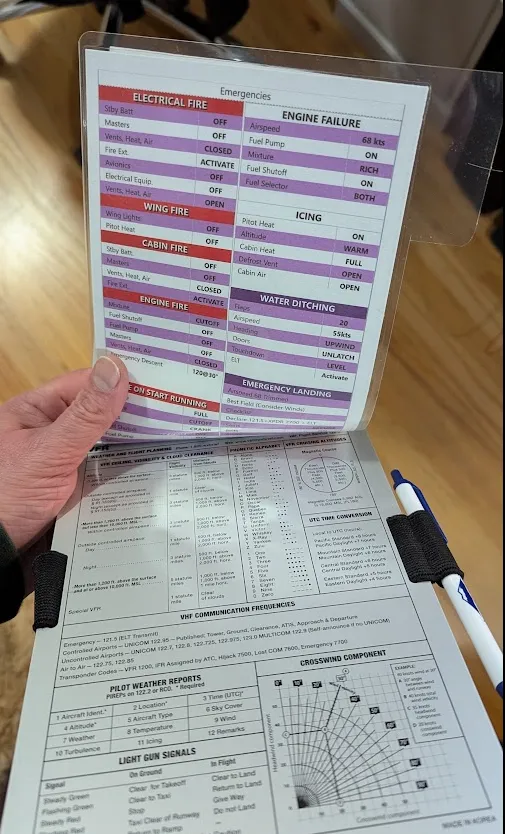
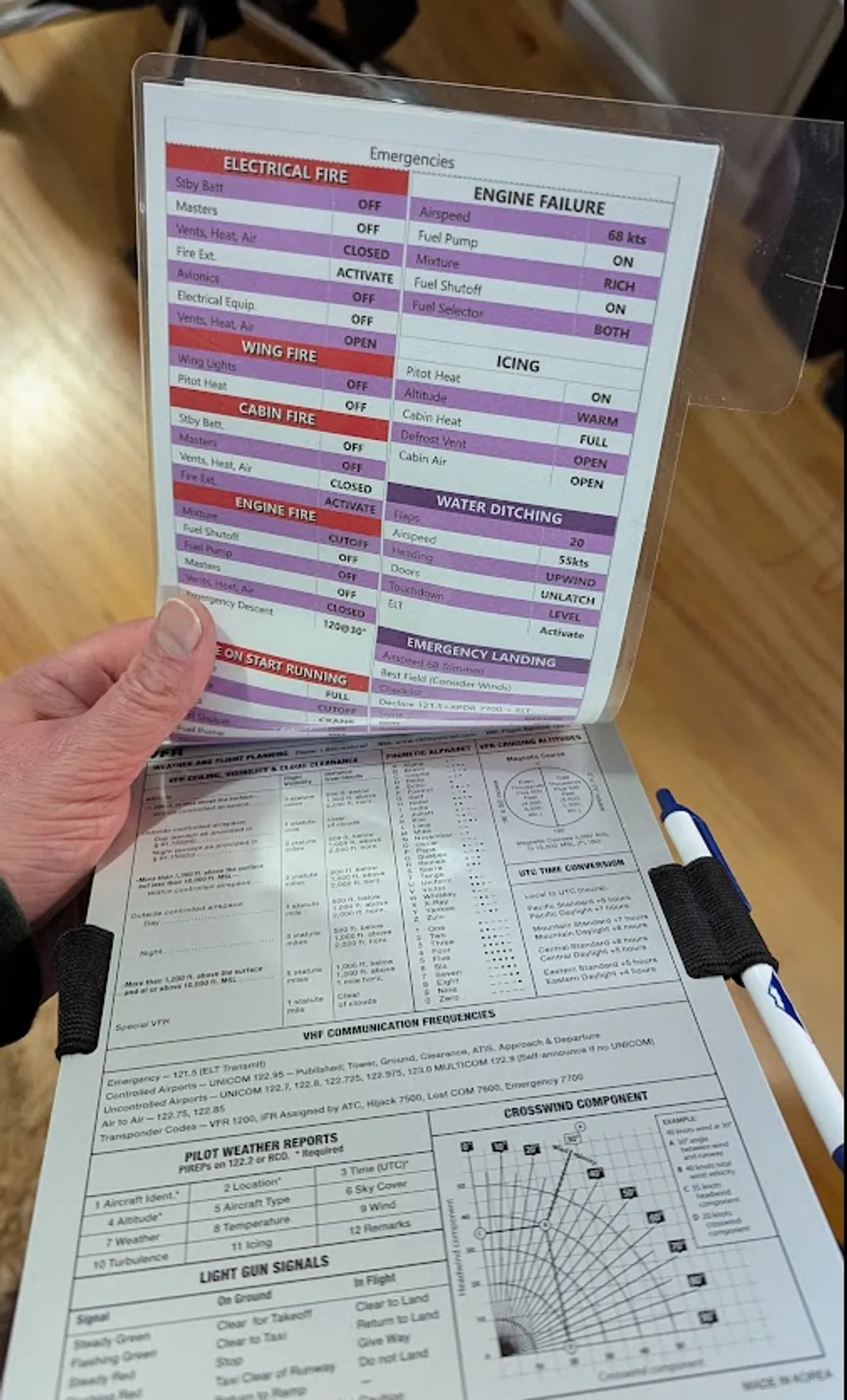
First modification: pen leash. I attached a pen leash so I can keep the pen secured to the board between instructions while saving the occasional trip to the carpet. Simple, but it makes a difference.
Second modification: custom reference sheet. I printed my own reference sheet, laminated it, and taped it to the plate. It’s much more legible than the standard markings, and I know it contains the information I actually want versus generic placeholders.
Everything combined—along with notes templates and the reliability of paper—makes for a great situational awareness tool. When things get busy in the cockpit, I know exactly where to look.
Why Analog Still Matters
In an age of iPads and electronic flight bags, the humble kneeboard might seem outdated. But here’s the thing: paper doesn’t run out of battery, doesn’t overheat, doesn’t need a software update, and doesn’t care if you spill coffee on it (okay, it cares a little, but it still works).
When I’m behind the aircraft and need to regain situational awareness quickly, my kneeboard is there. Reliable. Predictable. Exactly where I left it.
To be clear, I’m not affiliated with ASA whatsoever. This is just my opinion about their products after five years of daily use.
What’s your experience? Do you use a kneeboard, or have you gone fully digital? I’d love to hear what works for you.